
Slab Leak Detection & Foundation Pipe Repair in Medford, OR
When a pressurized copper or PEX water line fails beneath a concrete slab foundation, jackhammering across your living room floor on a guess causes thousands of dollars in avoidable damage. Medford Leak Detectives uses hydrostatic manifold isolation, acoustic floor sensors, FLIR thermal imaging, and tracer gas to pinpoint under-slab leaks and complete permanent PEX reroutes or surgical spot repairs.
What Is a Concrete Slab Leak & How Does It Affect Medford Homes?
A slab leak is a failure in a pressurized hot or cold domestic water line—or less commonly a sub-slab drain line—installed beneath or embedded within a poured concrete floor foundation. Throughout Medford, thousands of single-family homes, duplexes, and commercial buildings built from the 1960s through the present sit on monolithic or stem-wall concrete slabs where looped soft-drawn copper (Type L or Type M) or cross-linked polyethylene (PEX) supply tubing runs under the vapor barrier before stubbing up into kitchen islands, bathrooms, and laundry manifolds.
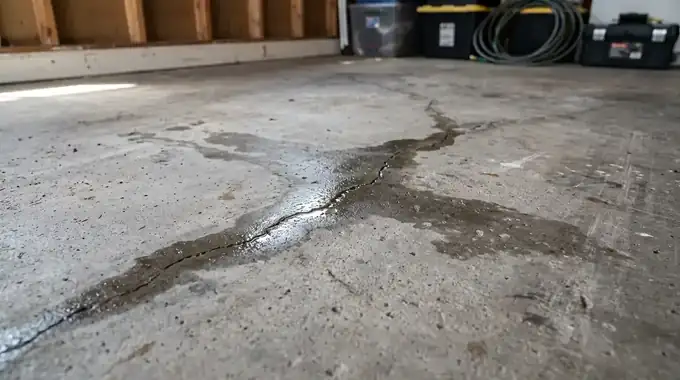
Because a concrete slab acts as a rigid cap, escaping water cannot simply evaporate. Instead, pressurized water saturates the compacted gravel sub-base and Rogue Valley clay soil beneath the house, eventually migrating upward through control joints, plumbing penetrations, or perimeter stem walls. Left unresolved, under-slab leaks wash out supporting soil, heave expansive clay, warp hardwood and luxury vinyl plank (LVP) flooring, and wick moisture 12 to 24 inches up interior drywall.
Why Sub-Slab Pipes Fail in Jackson County Foundations
In Medford, under-slab plumbing failures rarely happen at random. Four specific mechanical and chemical forces drive the majority of slab leaks we diagnose:
- Thermal Expansion Rubbing on Hot Water Loops: Every time a hot water tap opens, sub-slab copper tubing heats from 55°F to 120°F–140°F and expands slightly in length. Over 15 to 30 years of daily heating and cooling cycles, uninsulated copper rubbing against crushed basalt gravel or where it exits the concrete slab wears thin and develops an abrasion pinhole.
- Medford Expansive Clay Heave & Settlement: Homes built on Carney and Medford silty clay across East Medford, South Medford, and Southwest Medford experience seasonal soil expansion during wet winters and shrinkage during dry summers. Differential slab movement stresses buried pipe bends and manifold risers.
- High Static Water Pressure & Failed PRVs: In foothill neighborhoods along Barnett Road, Hillcrest, Lone Pine, and North Phoenix Road, street pressure often exceeds 90 to 110 PSI. Excessive velocity inside sub-slab copper loops strips away the pipe's protective internal oxide layer.
- Kinked Sleeves, Concrete Contact & Electrolysis: When bare copper directly touches alkaline Portland cement without a protective plastic sleeve, or when stray electrical grounding currents pass through damp soil, chemical pitting corrodes the pipe wall from the outside in.
Early and Advanced Warning Signs of a Foundation Slab Leak
- Warm or Hot Spots on Tile, Concrete, or LVP Flooring: A leaking hot water line heats the surrounding slab to 85°F–105°F, creating a distinct warm patch you can feel with bare feet.
- Continuous Hissing or Rushing Sound at Manifold Walls: Sound vibrations travel faster through solid copper and concrete than through air, often audible near the water heater, hallway bathroom, or kitchen island stub-ups.
- Water Seeping Up Through Floor Seams or Cracks: Clear water appearing between vinyl planks, darkening grout lines, or damp carpet padding in the middle of a room with no overhead leak.
- Water Heater Running Constantly & High Energy Bills: A hot-side slab leak acts like an open hot faucet 24 hours a day, forcing gas or electric water heaters to fire continuously.
- Efflorescence (White Chalky Powder) Along Exterior Foundation Edges: Water escaping under the slab pushes dissolved minerals out through the exterior perimeter concrete curb.
How We Pinpoint Slab Leaks Without Exploratory Jackhammering
Wait—why can't you just break the floor where the carpet feels wet or warm? Because water trapped beneath a vapor barrier or concrete slab travels along sand channels, post-tension cable trenches, and plumbing sleeves before surfacing at the nearest crack or pipe penetration—often 6 to 15 feet away from the actual copper pinhole! Our four-stage diagnostic protocol finds the true pipe breach:
- Hot vs. Cold Manifold Pressure Isolation: We isolate the water heater and manifold branches and perform a calibrated gauge test to determine which exact sub-slab loop is losing pressure.
- Electronic Pipe Path Tracing: Using an electromagnetic signal transmitter attached to the copper risers at the manifold and fixtures, we map the exact path and depth of the loop beneath your floor from point A to point B.
- Infrared Thermography (FLIR) Thermal Mapping: We scan the entire floor along the traced pipe path to identify the hottest thermal bloom (for hot lines) or subtle cooling anomaly (for cold lines), showing where water is pooling first.
- Acoustic Ground Plate & Tracer Gas Pinpointing: We place shielded acoustic floor sensors directly over the traced pipe path—and when needed on quiet leaks, inject safe 5% hydrogen / 95% nitrogen tracer gas—to verify the exact point where water or gas exits the pipe wall before recommending any repair.
Slab Leak Repair Comparison: Overhead PEX Reroute vs. Direct Spot Repair
Once we locate the exact leaking loop and failure point, we walk you through the two primary repair methods so you can make an informed financial and structural decision:
| Comparison Factor | Overhead PEX Line Reroute (Recommended for Aging Loops) | Direct Sub-Slab Spot Repair (Single Access Portal) |
|---|---|---|
| How the Repair Works | We cap off the leaking sub-slab copper loop at both ends and run a new insulated PEX-a line through the wall framing and attic space | We open a targeted 12×12 to 18×18 inch opening directly over the pinpointed leak, excavate down to the pipe, braze/couple a new section, sleeve it, and pour new concrete |
| Impact on Finished Flooring | Zero floor demolition — preserves hardwood, travertine, tile, and post-tension concrete slabs completely intact | Requires removing 1 to 4 floor tiles or cutting a small square of carpet/LVP at the exact leak spot |
| Future Leak Risk on That Line | Eliminated — the entire underground copper loop is retired and replaced with new above-ground piping | Repairs the current pinhole, but the rest of an aging 25-to-40-year-old copper loop remains beneath the slab |
| Best Situated For | Homes over 15–20 years old, post-tension slabs, expensive continuous flooring, or loops with prior pinhole history | Newer pipes damaged by a single localized rock abrasion, or vaulted-ceiling rooms where attic/wall routing is obstructed |
| Typical Completion Time | Usually completed in 4 to 8 hours (plus minor drywall patch access at stub-up walls) | Usually completed in 3 to 6 hours including sub-base backfill and concrete patch |
Post-Tension Foundation Slab Safety in Newer Medford Subdivisions
Many newer homes in East Medford, Southeast Medford (Centennial, Vista Pointe), and Southwest Medford are built on post-tensioned concrete slabs reinforced with high-strength steel tendons tensioned to over 25,000 pounds of force. Cutting or jackhammering into a post-tension cable is a severe structural and safety hazard. Before any direct slab access is ever performed on a post-tension foundation, we verify tendon spacing and strongly prioritize overhead PEX rerouting so the structural slab remains 100% untouched.
Practical Cost Considerations & Insurance Documentation
In Medford, standalone electronic slab leak detection typically is provided with clear upfront estimates depending on foundation size and whether tracer gas testing is required. If you choose a direct spot repair or a single-line overhead PEX reroute, total repair costs depend on line length, wall/ceiling access, and whether a failing Pressure Reducing Valve (PRV) also needs replacement to bring household pressure below 75 PSI.
If your slab leak caused sudden water damage to flooring, baseboards, or cabinetry, many Oregon homeowner insurance policies cover the diagnostic "tear-out and access" portion and floor restoration. We provide clear written diagnostic summaries, pressure readings, and thermal/moisture photographs for your insurance adjuster and for Medford Water Commission leak adjustment applications.
Foundation Leak Detection & Copper Pinhole Slab Repair in Medford, OR
When you need slab leak detection Medford or foundation leak detection in 97501 or 97504, pinpointing the exact sub-slab manifold loop is critical. High mineral scaling, expansive Carney clay movement, and elevated street pressure cause micro-perforations—sometimes nicknamed copper pinhole surgery Medford repairs—in hot and cold Type M and Type L copper lines buried under concrete slabs. Our electronic acoustic and tracer gas instruments locate foundation pipe leaks within inches so you can choose between a targeted single-tile spot repair or a full overhead PEX-a reroute.
Turnkey Slab Leak Detection, PEX Rerouting & Concrete Spot Repair
Don't pay one company to mark your floor and wait days for a second contractor to restore your water. Medford Leak Detectives provides both electronic slab leak pinpointing and complete plumbing repair across Medford, OR:
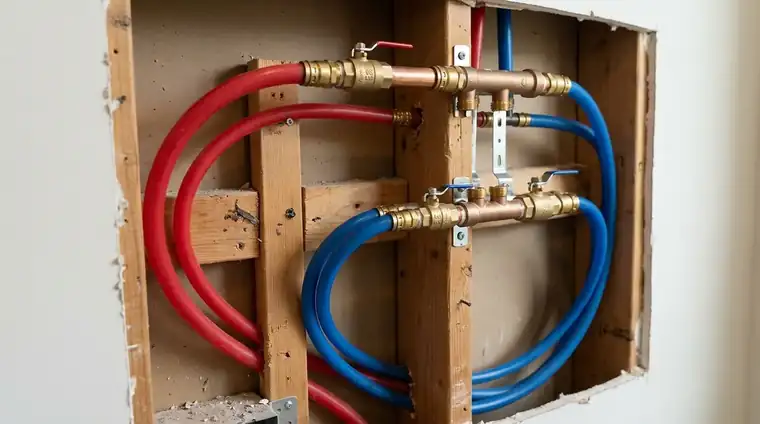
- Single-Line & Whole-Manifold PEX-a Reroutes: Clean, insulated routing through attics and interior partition walls with minimal drywall openings.
- Surgical Concrete Access & Silver-Braze Spot Repairs: Confined floor access, dielectric pipe sleeving, vapor barrier restoration, and high-strength concrete patching.
- PRV & Thermal Expansion Tank Installation: Protecting sub-slab copper loops from East Medford pressure spikes and water heater thermal expansion.
Call (541) 906-0245 for slab leak detection and repair in Medford, OR.
Slab Leak Detection & Repair in Medford, OR: Frequently Asked Questions
Answers to real Medford homeowner questions about warm floor spots, jackhammering vs. PEX reroutes, post-tension slabs, and insurance claims.
Why is a warm spot on my tile or vinyl floor a sign of a slab leak?
In slab-on-grade Medford homes, copper hot water lines loop beneath the concrete between the water heater, kitchen island, and bathrooms. When a hot line develops a pinhole leak, 120°F water pools under the concrete and conducts heat upward, warming a 2-to-4-foot area of tile, laminate, or carpet.
Can you find a cold-water slab leak when there is no warm spot on the floor?
Yes. While infrared cameras quickly spot hot-water slab leaks, cold-water slab leaks are located by isolating the cold manifold branches, tracing the metallic pipe path electromagnetically, listening with amplified ground plates, and—when needed—injecting non-toxic 5% hydrogen / 95% nitrogen tracer gas that rises directly through the slab at the break.
Why shouldn't a plumber just jackhammer where water is coming up through the floor?
Water leaking under a concrete slab follows gaps under the vapor barrier, sand bedding channels, or pipe sleeves until it finds a control joint or floor crack to surface—often 5 to 15 feet away from the actual pipe hole. Breaking concrete where water surfaces without electronic pinpointing frequently misses the leak entirely.
When is an overhead PEX reroute better than opening the concrete slab?
If your sub-slab copper loop is more than 15 to 20 years old, fixing one pinhole in the concrete leaves the rest of that thinned copper loop underground where a second pinhole can form months later. Cap-and-abandoning the bad sub-slab loop and routing a new insulated PEX-a line through the walls and attic saves your flooring and replaces the entire failing run.
Will an overhead PEX reroute in a Medford attic freeze during the winter?
When we install an overhead PEX reroute in Southern Oregon, we route piping as low as possible along ceiling joists beneath blown-in attic insulation and wrap the lines in thick closed-cell pipe insulation. PEX-a also expands if exposed to frost, making it far more resilient than rigid copper during Rogue Valley winter cold snaps.
How do you handle slab leaks in East Medford homes with post-tension slabs?
Post-tension slabs contain high-voltage-like tensioned steel cables that must never be cut. You can usually identify a post-tension slab by the stamped warning in the garage concrete or round grout pockets along the exterior foundation edge. On post-tension homes, we strongly recommend overhead PEX reroutes or use electromagnetic cable scanning before any localized access.
How much does slab leak detection cost in Medford, OR?
Electronic slab leak detection in Medford generally is provided with clear upfront estimates depending on the number of manifold loops and whether tracer gas testing is needed. We provide a firm repair quote for both spot repair and overhead rerouting once the exact line and location are verified.
Should I turn off my water heater if I suspect a hot-water slab leak?
Yes. If you feel a warm spot on the floor or hear water hissing near the water heater, close the cold-water shut-off valve on top of the water heater and switch an electric water heater's breaker OFF (or set a gas heater to PILOT). This stops pressurized flow to the hot slab loops while keeping cold water running to your toilets and sinks until we arrive.
Can a slab leak crack my foundation or ruin hardwood floors?
Yes. Continuous water flow beneath a slab saturates expansive Rogue Valley clay soil, causing uneven foundation heaving or washing out sub-base sand voids. Moisture wicking upward through the concrete also causes solid oak and engineered hardwood floors to cup, crown, and delaminate within days.
Does homeowners insurance help pay for slab leak repairs in Oregon?
Most Oregon homeowner policies do not pay for the small piece of corroded pipe itself, but many policies cover the cost of electronic leak detection, breaking and patching the slab (or rerouting access) to reach the pipe, and drying or replacing damaged flooring and baseboards. We supply full diagnostic documentation for your adjuster.
How accurate is your slab leak detection Medford and foundation leak locating?
By combining manifold pressure isolation, FLIR thermal floor mapping, electro-acoustic ground microphones, and hydrogen/nitrogen tracer gas, our slab leak detection Medford technicians locate sub-slab hot and cold pipe failures within a 6-to-12-inch radius beneath concrete foundations.