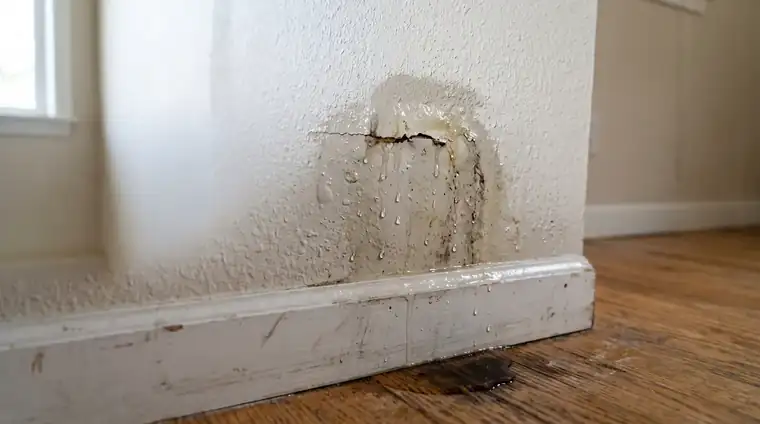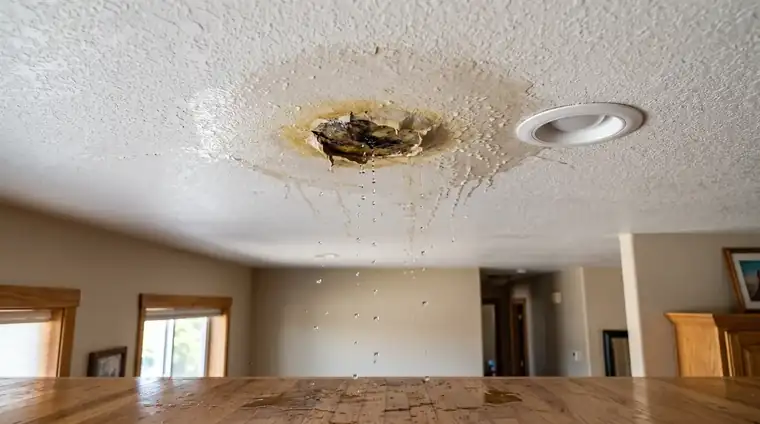
A brown coffee-ring stain, sagging drywall tape, or rhythmic drip from a ceiling light fixture only tells you where gravity finally pulled water through the gypsum board—not where the water originated. Because water travels horizontally along wooden floor joists, truss chords, HVAC ductwork, and vapor barriers before pooling at a low drywall seam, the true leak source is frequently 4 to 12 feet away from the visible stain.
In This Guide
- The Four Distinct Sources of Ceiling Stains in Medford Homes
- Symptom Comparison Matrix: Supply vs. Drain vs. Shower Pan vs. Roof/HVAC
- Step-by-Step Safe Homeowner Checks (Without Cutting Drywall)
- When to Stop Immediately: Sagging Drywall & Electrical Hazards
- How Thermal Imaging, Moisture Meters & Borescopes Pinpoint the Source
- Frequently Asked Questions
1. The Four Distinct Sources of Ceiling Stains in Medford Homes
Before calling a roofer or a plumber—or sawing into your ceiling—it helps to understand the four systems capable of putting water above a residential ceiling in Southern Oregon:
- Pressurized Domestic Water Supply Pipes: Hot and cold copper, PEX, or CPVC lines running through second-floor joist bays (or routed overhead through an attic after a previous slab leak reroute). Because these lines are under 50 to 80+ PSI of constant pressure 24 hours a day, a pinhole leak wets the ceiling continuously regardless of weather or fixture use.
- Upstairs Sanitary Drain Traps, Toilet Wax Rings & Waste Lines: ABS, PVC, cast-iron, or brass/lead drain pipes underneath an upstairs bathtub, shower, toilet, vanity sink, or second-floor laundry room. These pipes carry zero water when nobody is using the bathroom; they only leak when a fixture is drained or flushed.
- Upstairs Shower Pan Liners, Grout & Valve Trim Plates: Water escaping outside the pipes during a shower—such as water seeping through cracked tile grout, an uncaulked tub spout/mixing valve escutcheon, or a failed shower curb liner.
- Roof Penetrations, Attic Condensation & HVAC Condensate Lines: Rainwater entering past a cracked rubber plumbing vent boot on the roof during a Rogue Valley winter storm, frost melting inside an uninsulated bathroom exhaust fan duct in January, or an overflowing air-conditioning evaporator condensate pan in the attic during a 100°F July heatwave.
2. Symptom Comparison Matrix: Supply vs. Drain vs. Shower Pan vs. Roof/HVAC
Use this diagnostic table to match what you see and hear against the four possible sources:
| Clue / Observation | Pressurized Supply Pipe | Upstairs Drain or Toilet Wax Ring | Shower Pan / Tile / Trim Seepage | Roof Flashing or Attic HVAC |
|---|---|---|---|---|
| When does the stain grow or drip? | 24/7 continuously (expands steadily every hour) | Within 2–10 minutes after flushing a toilet, draining a tub, or running upstairs laundry | 15–45 minutes after someone stands in the shower (but NOT when filling the tub spout alone) | During/after rainfall (roof), winter freeze thaw (vent frost), or hot summer AC run (HVAC pan) |
| What is directly above the ceiling? | Second-floor bathroom, laundry, or attic with rerouted PEX/water heater pipes | Second-floor bathroom, kitchen, or laundry room | Second-floor walk-in tile shower or tub/shower enclosure | Top-floor ceiling directly beneath attic space or roof slope |
| Does the MWC street water meter move with all taps off? | Yes (for moderate-to-large leaks) | No (drains sit downstream of closed faucets) | No (only leaks while shower is running) | No |
| Visual & odor characteristics | Clean water; warm on FLIR camera if hot line; faint continuous hiss | Soapy or discolored water; occasional sewer odor; gurgling or rhythmic drip | Dampness concentrated near the wall below the shower curb or valve wall | Tannin-brown ring from roof decking/insulation dust; cold condensate drip below AC air handler |
3. Step-by-Step Safe Homeowner Checks (Without Cutting Drywall)
- Draw a Light Pencil Outline Around the Stain: Use a soft graphite pencil to lightly trace the outer edge of the damp ring and write the time. This lets you see immediately whether the moisture footprint is actively expanding hour by hour (supply leak) or stopping between bathroom uses (drain/enclosure leak).
- Check Your Medford Water Commission Curb Meter: Turn off all faucets and appliances indoors and check the low-flow indicator dial inside your street meter box. If the small red triangle or digital flow indicator is spinning while no fixtures are in use, you have an active pressurized supply leak. (See our full guide on how to check your Medford water meter for a leak.)
- Inspect Under Upstairs Sinks & Behind Toilets: Before assuming a pipe broke inside the floor joists, shine a flashlight inside the upstairs bathroom vanity cabinet and behind the toilet bowl. A loose P-trap slip nut or weeping angle-stop valve inside an upstairs vanity frequently drips onto the cabinet floor, runs out the back hole around the drain pipe, and stains the downstairs ceiling!
- Check Attic HVAC Condensate Pans (Summer Stains on Top Floors): If a ceiling stain appears under the attic during a hot July or August week in Medford when it hasn't rained in a month, check whether your central air conditioning air handler is mounted in the attic. A clogged 3/4-inch PVC condensate drain line causes the auxiliary drip pan to fill and drip onto the hallway ceiling below.
4. When to Stop Immediately: Sagging Drywall & Electrical Hazards
- Turn off the circuit breaker for that room's lighting circuit at your main breaker panel immediately (only if the panel is in a dry location).
- Keep family members and pets out from directly underneath the sagging drywall span.
- Shut off the house main water valve if the drip is continuous and call (541) 906-0245 for immediate diagnostic isolation.
5. How Thermal Imaging, Moisture Meters & Borescopes Pinpoint the Source
When you schedule an interior wall and ceiling leak inspection with Medford Leak Detectives, we avoid exploratory drywall cutting by combining four diagnostic steps:
- FLIR Infrared Thermal Mapping: Even when only a 6-inch brown spot is visible to the naked eye, our thermal camera reveals the full hidden path of evaporative cooling (or hot-water warmth) across the ceiling joist bay—showing which direction the water is traveling from.
- Pin & Pinless Capacitance Moisture Gradients: We take numerical moisture readings along the ceiling and adjacent walls to locate the highest saturation point (the origin) versus the lowest pooling point.
- Sequential Upstairs Fixture Isolation: When an upstairs bathroom sits above the ceiling, we test each system separately: first pressurizing the hot and cold supply lines with acoustic contact probes, next plugging and flood-testing the shower pan below the curb, then testing the tub/shower drain trap with warm dyed water, and finally testing the shower riser and diverter spout under dynamic flow.
- 6mm Fiber-Optic Borescope Confirmation: Once the exact framing bay and fixture are isolated, we can often slide a flexible lighted camera through an existing shower valve trim opening or a tiny 1/4-inch hole to visually verify the leaking joint before making a neat, minimal access cut for repair.
Ceiling Water Stain Troubleshooting: Frequently Asked Questions
Why is the ceiling stain in the middle of my living room when the upstairs bathroom is 8 feet to the left?
Engineered wood I-joists, dimensional lumber joists, and drywall tape seams run horizontally across the ceiling. Water dripping from an upstairs tub trap or supply line lands on top of the ceiling drywall or vapor barrier and flows downhill along the framing bay until it hits a drywall seam, screw head, or light box 8 feet away.
How can I tell if my upstairs toilet wax ring is causing the ceiling stain below?
A failed toilet wax ring only leaks when the toilet is flushed (it will never move your water meter when unused). Look for slight rocking when you press on the rim of the toilet bowl, darkened grout or vinyl around the toilet base, and a ceiling stain directly below (or one joist bay over from) the toilet closet bend.
Can a roof leak show up on a first-floor ceiling in a two-story Medford home?
Yes, though less common than upstairs plumbing leaks. Rainwater entering around a roof valley, chimney flashing, or plumbing vent boot can run down the inside of an exterior wall cavity or along a vertical plumbing vent stack from the attic and pool on the first-floor ceiling ledge.
Why did my ceiling drip during a cold January morning in Medford when it wasn't raining?
During cold Rogue Valley winter mornings (15°F–25°F), two things happen: (1) warm moist air from morning showers rises into uninsulated bathroom exhaust ducts in the attic, condenses into ice, and melts back down through the fan housing when the sun hits the roof; or (2) a frozen domestic water pipe in the attic/ceiling cavity thaws and begins spraying.
Should I cut a hole in the wet ceiling stain to let it dry out before the technician arrives?
If the ceiling is not bulging with standing water, leave the drywall intact until our technician scans it. Cutting the ceiling open before testing destroys the thermal pattern that our FLIR infrared camera uses to trace the moisture trail back to the true origin.
If the ceiling stain turns out to be a leaking pipe or upstairs drain, can you repair it right away?
Yes. Once we isolate the exact leaking supply pipe, shower valve, tub waste-and-overflow shoe, or toilet flange, our plumbing technicians can open a clean, targeted access square and complete the permanent plumbing repair during the same visit.
Need Help Tracing a Ceiling or Wall Stain in Medford?
Share where the stain sits, whether there is an upstairs bathroom or attic overhead, and what your water meter shows. Call Medford Leak Detectives at (541) 906-0245 or explore our interior wall and ceiling leak detection service.
Call (541) 906-0245